All applications
ExampleTaskOrganization

Campaign concepts

Campaigns repeat, and creative is cheap to vary but expensive to remember. Compare positioning directions instead of shipping the first plausible line — and keep what you learn for the next brief.

The problem
The first idea ships, drafts drift off-voice, and feedback is all taste.
How kchloe helps
  1. M1Review against your own rubric
    Coming soon
  2. M2Run it more than one way
    Live
What stays
Your brand’s own rubric, and the directions you compared.
Comes back
With every campaign
On the team
You, the creative team, a kWorker, an outside copywriter
Layers
Task · Organization
Start with this

Where it gets hard

From brief to launch — and after.

  1. Day 1

    The brief arrives with a launch date.

  2. Day 2P1

    The first plausible line becomes the concept.

  3. Day 4P2

    Drafts come back off-voice; the same corrections again.

  4. Day 5P3

    “Not quite there” — the third round of feedback.

  5. Day 6

    Launch.

P1The first idea ships

There’s no time to try another direction, so the first decent line wins.

P2Drafts drift off-voice

Writers and tools drift from the brand, and every round needs the same fixes.

P3Feedback is all taste

“Not quite there” doesn’t say what to change.

Sound familiar? · example scenes

“We always go with the first idea.”
“That doesn’t sound like us.”
“Can you make it pop a bit more?”

How kchloe helps

One method for each sticking point.

M1

Review against your own rubric

Coming soon
SolvesP2P3

How it works

  1. Write down what “good” means for this work, once.
  2. Each run is reviewed against the same criteria.
  3. The rubric gets sharper as your team uses it.

In this work

  • Turn your brand guide into a rubric every concept is reviewed against.
  • Feedback points to a criterion — “brand voice”, “clarity” — instead of a feeling.
desk.kchloe.co/tasks/rubricExample
RubricSpring campaign · brand rubric
Audience fitSpeaks to the people the brief names.
DifferentiationCouldn’t be said by a competitor.
Message clarityOne idea, understood at a glance.
Brand voiceSounds like you.
EvidenceClaims you can back up.

Each run will be reviewed against these — by a person.

Coming soon · example
M2

Run it more than one way

Live
SolvesP1

How it works

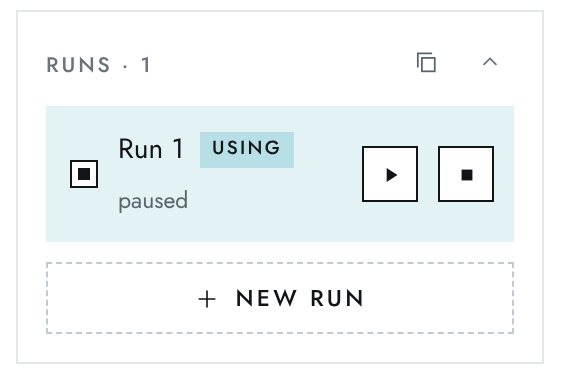
  1. Start a run from the spec.
  2. Start another with a different approach, worker or constraint.
  3. Compare them, then choose the run to use — or combine the best parts.

In this work

  • Run productivity, quality and founder-story directions side by side.
  • A kWorker drafts many concepts; the three strongest get a human look.

Coming soon: rubric reviews score each run, and signals suggest what to try next.

kchloe screen · sample data

kchloe screen · sample data

Where else it applies

The same pattern, in nearby work.

Product launch messaging

One launch, several angles — keep the one that fits.

Social content series

Comes back every week — the brand rubric does the most work here.

Event campaigns

Same pattern, with a hard date.

Email sequences

Several versions per step; keep what people opened.

What to expect

What builds up over time.

1campaign

A first brand rubric, and three directions you compared.

3campaigns

Brand standards your reviewers actually use.

10campaigns

Your brand’s own rubric, shaped by real campaigns.

What can change

  • Feedback can point to a criterion, not a feeling.
  • Drafts can stay on voice with fewer rounds of fixes.
  • More than one direction can be on the table before you choose.

Results differ from task to task, and we won’t promise them. What we can promise is effort: we’ll keep doing our best to help your work improve.

Start here

Bring this first

You bringA brief

Paste it into a quick chat and attach the brief. kchloe turns it into a draft spec you can edit.

Develop concepts for the spring campaign from the attached brief. Try a productivity, a quality and a founder-story angle, and check them against our brand guide.

What people own

  • Each variation needs a reason — volume isn’t the goal.
  • Claims and legal copy need a human owner.
  • A person approves what goes out under the brand.

Bring one important task. See how far it can go.

Start free. Bring your team when you're ready.