Make every run better and better
Important work gets better when you can clarify the goal, try more than one approach, evaluate the result, and use what you learned in the next attempt.
One good result is valuable. A system that keeps learning how to produce better results is an advantage.
Rough request → Spec → Strategy variations → Runs → Rubric review → Better run → Private Library → Stronger next task.
Start rough. Run more than one way.
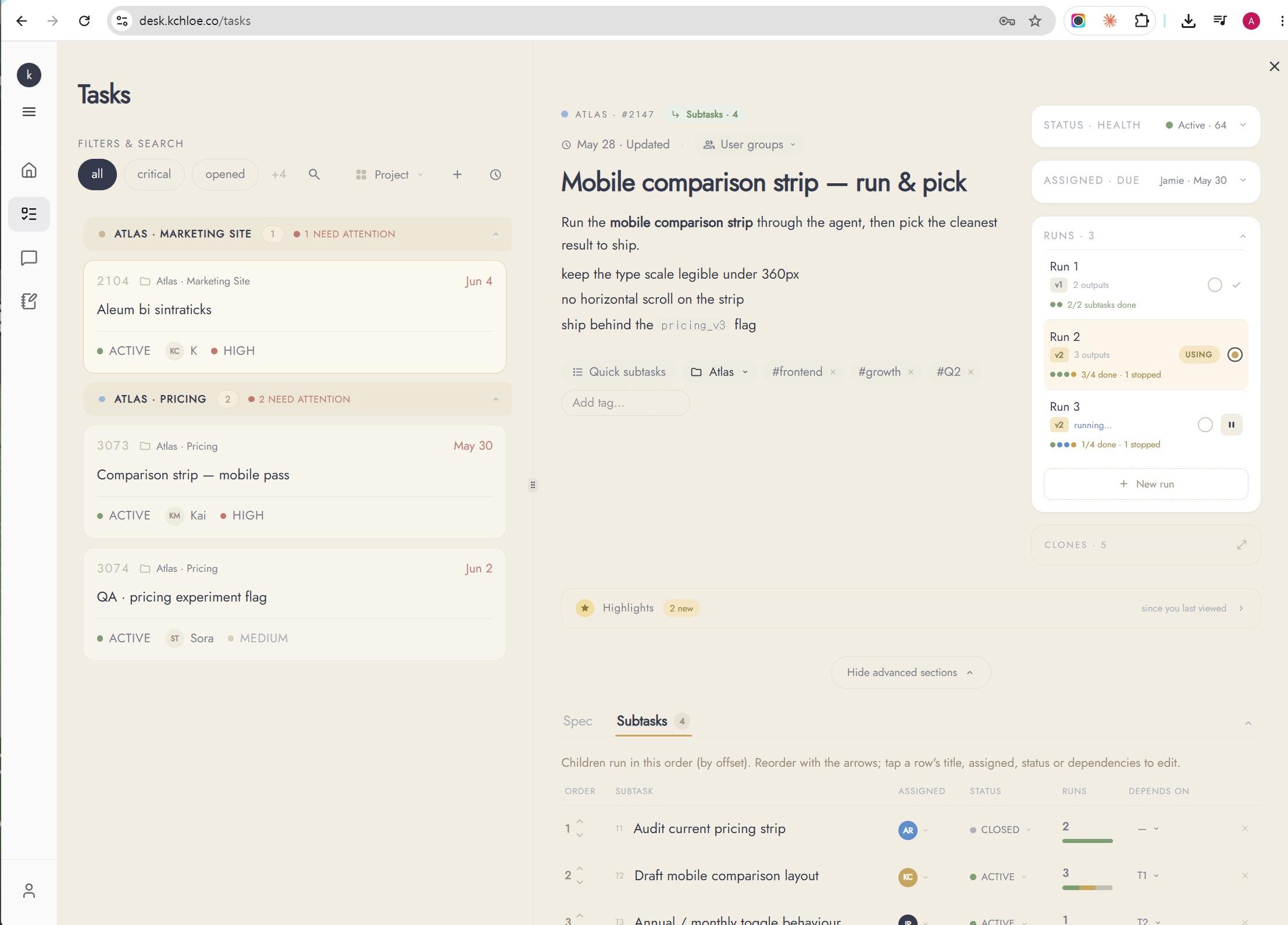
A short request is enough to begin. Chloe can uncover missing context, sharpen the objective, and break larger work into subtasks. Then a second run should have a reason to exist: change the lens, the worker, the constraints. Compare them. Review against a rubric so “better” is specific — then try again.
Infinite reach, still one task
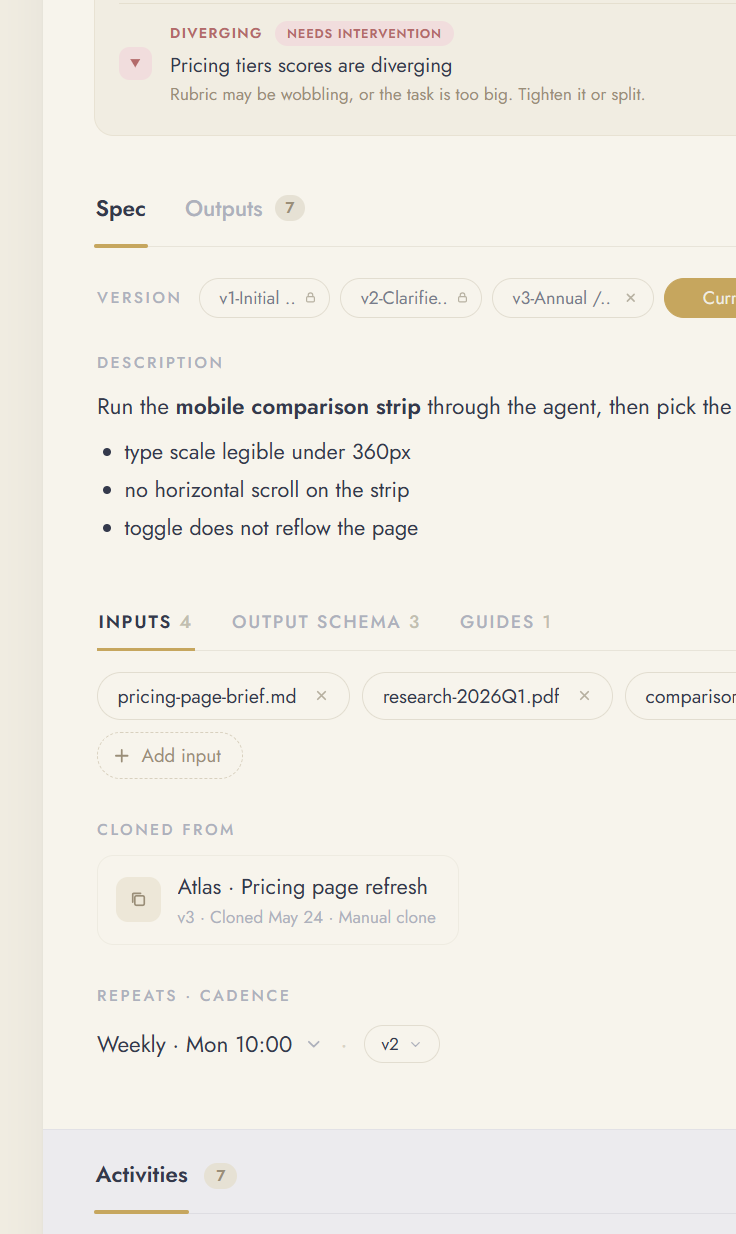
Chloe works beside your team. Agent workers can now join a task — mention them in Activities, add a 3rd-party worker as a run option, plan subtasks, and assist review-rubrics. Different expertise can compete or combine while the spec, decisions and scores stay in one place.
Turn know-how into an asset you own
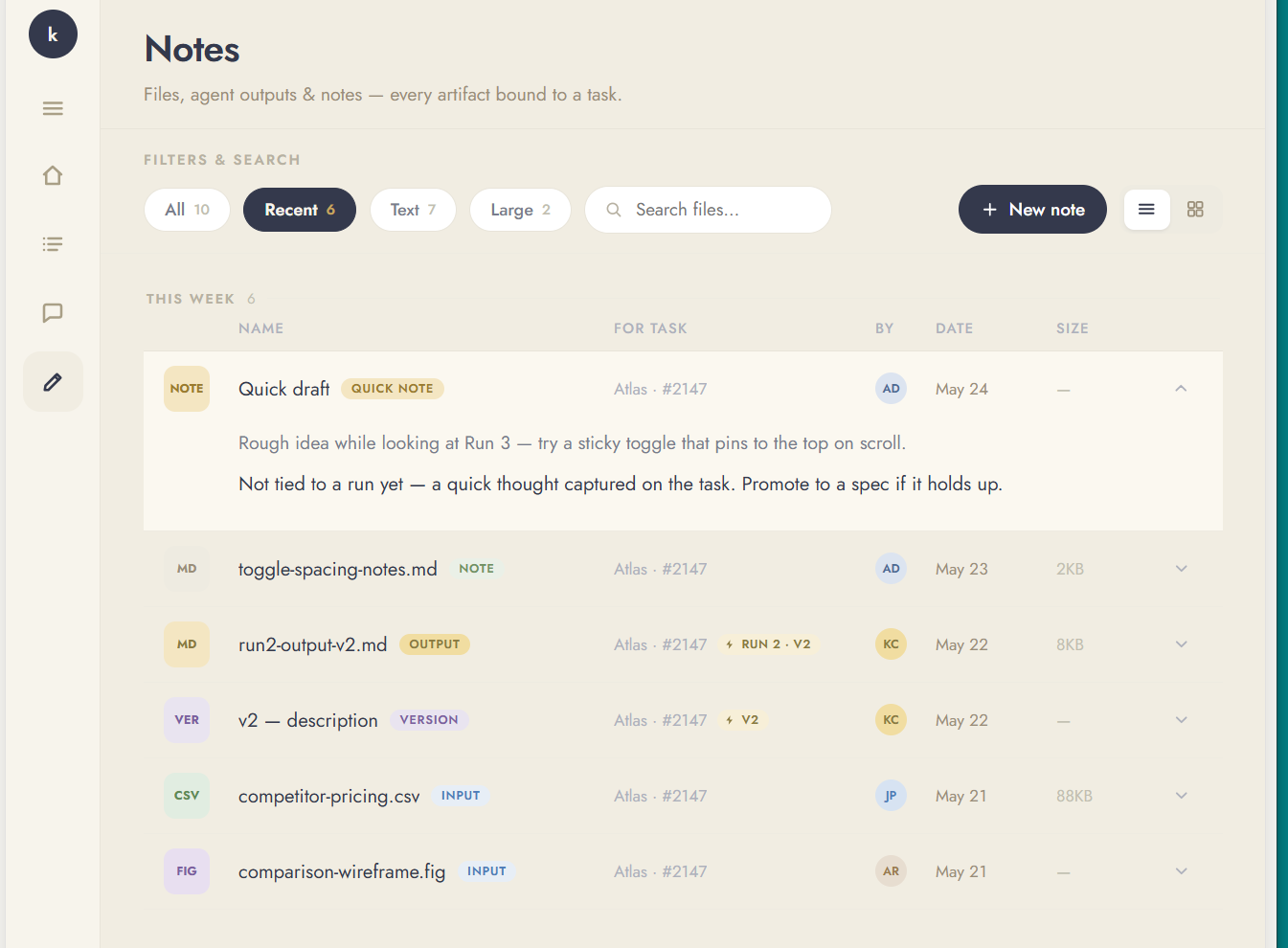
Most tools save the final file. Kew Chloe keeps the useful path: refined specs, sources, winning strategies, rubric changes, rejected approaches, and artifacts. The next similar task no longer begins from a blank prompt. It begins from evaluated history that is increasingly yours.
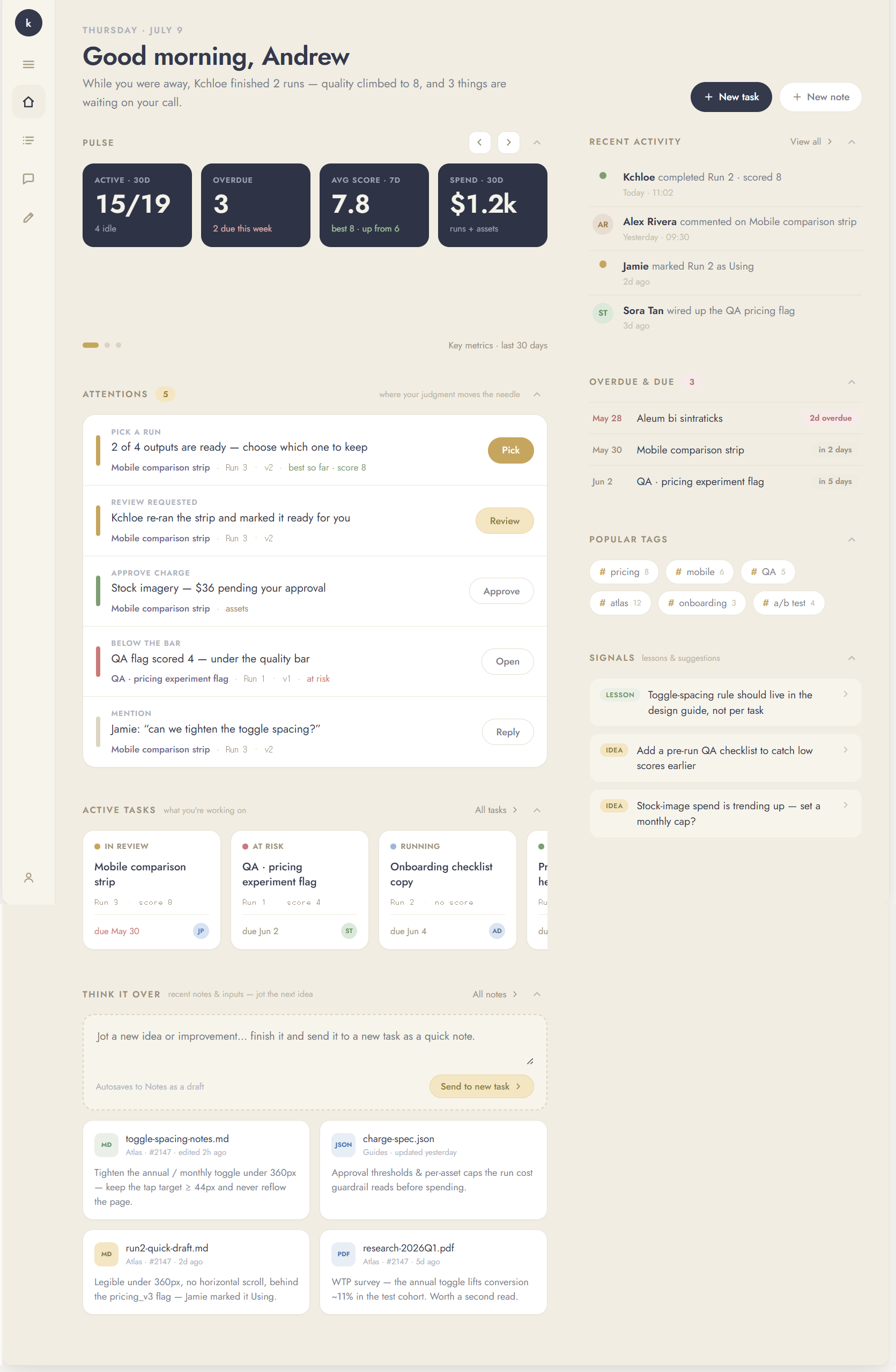
One overview of the improvement cycle
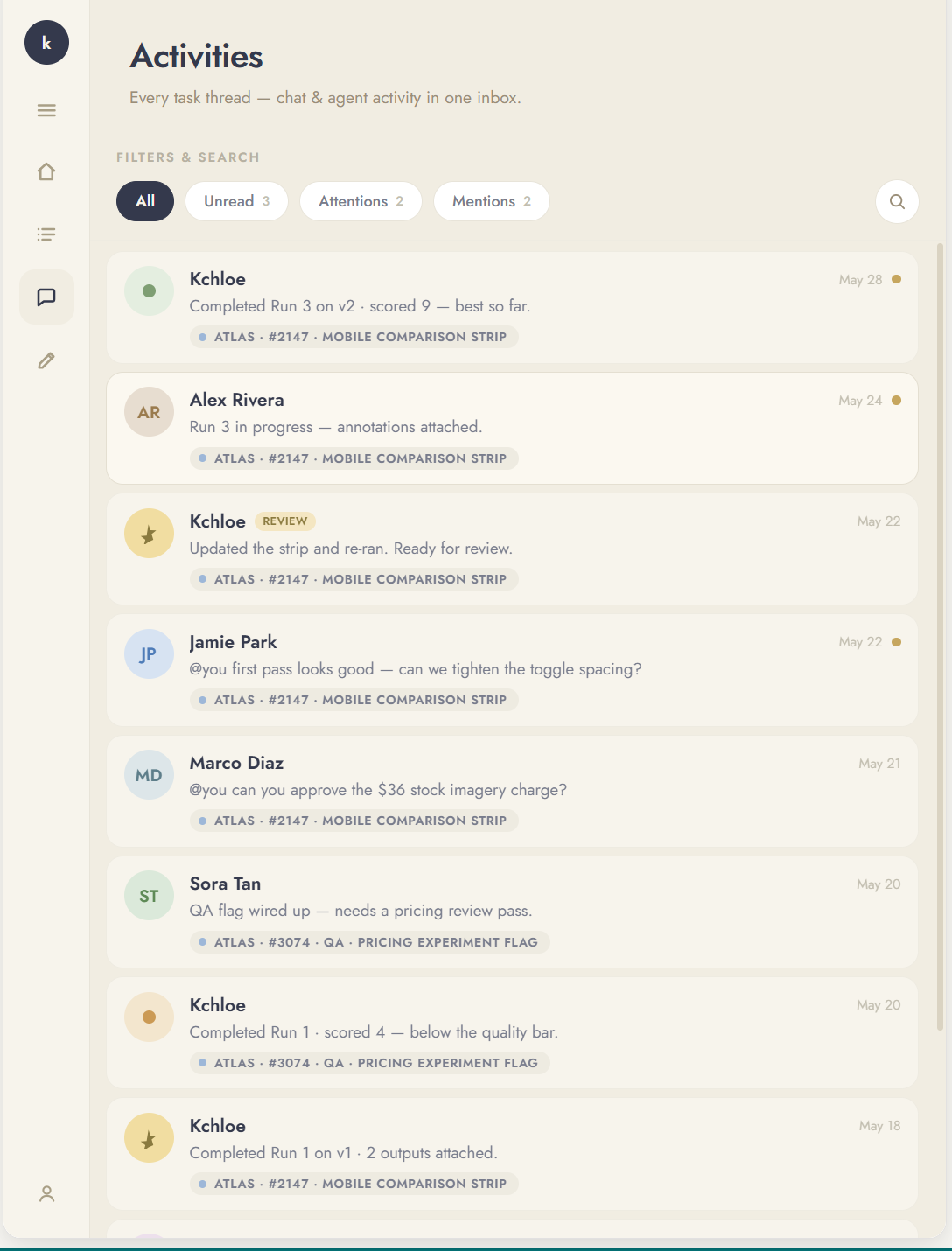
Home shows active tasks, runs waiting for review, and chances to try a better approach. Activities keeps questions, worker reports and approvals on the work they change. Library preserves what deserves to be reused.