All applications
ExampleTaskTeam

Research & strategy

Strategy rarely has one obvious answer. A vague request like “analyze our competitors” becomes a structured spec, then several lenses you can actually compare — and what held up stays for next quarter.

The problem
One lens becomes the answer, sources go missing, and the decision loses its reasons.
How kchloe helps
  1. M1Let a kWorker gather and draft
    Live
  2. M2Run it more than one way
    Live
  3. M3Decide on the task
    Live
What stays
Sources you can check, the lenses you compared, and why you decided.
Comes back
Every quarter
On the team
You, a strategy lead, a kWorker that gathers sources, an industry expert
Layers
Task · Team
Start with this

Where it gets hard

A quarterly competitor review.

  1. Week 1

    The question: how are our three closest competitors moving?

  2. Week 1P1

    One analyst, one lens, one deck.

  3. Week 2P2

    Sources pasted into slides; the links are lost.

  4. Week 3

    Presented. Decided — on a call.

  5. Week 6P3

    “Why did we decide this?” Nobody wrote it down.

P1One lens becomes the answer

There was time for one analysis, so it gets treated as the answer.

P2Sources go missing

Links and data scatter across tabs and decks; nobody can check them later.

P3The decision loses its reasons

The deck says what was decided, not which evidence it rested on.

Sound familiar? · example scenes

“Is this the only way to look at it?”
“Where did this number come from?”
“Why did we decide that, again?”

How kchloe helps

One method for each sticking point.

M1

Let a kWorker gather and draft

Live
SolvesP2

How it works

  1. Add a kWorker to the task — in the cloud or on your own computer.
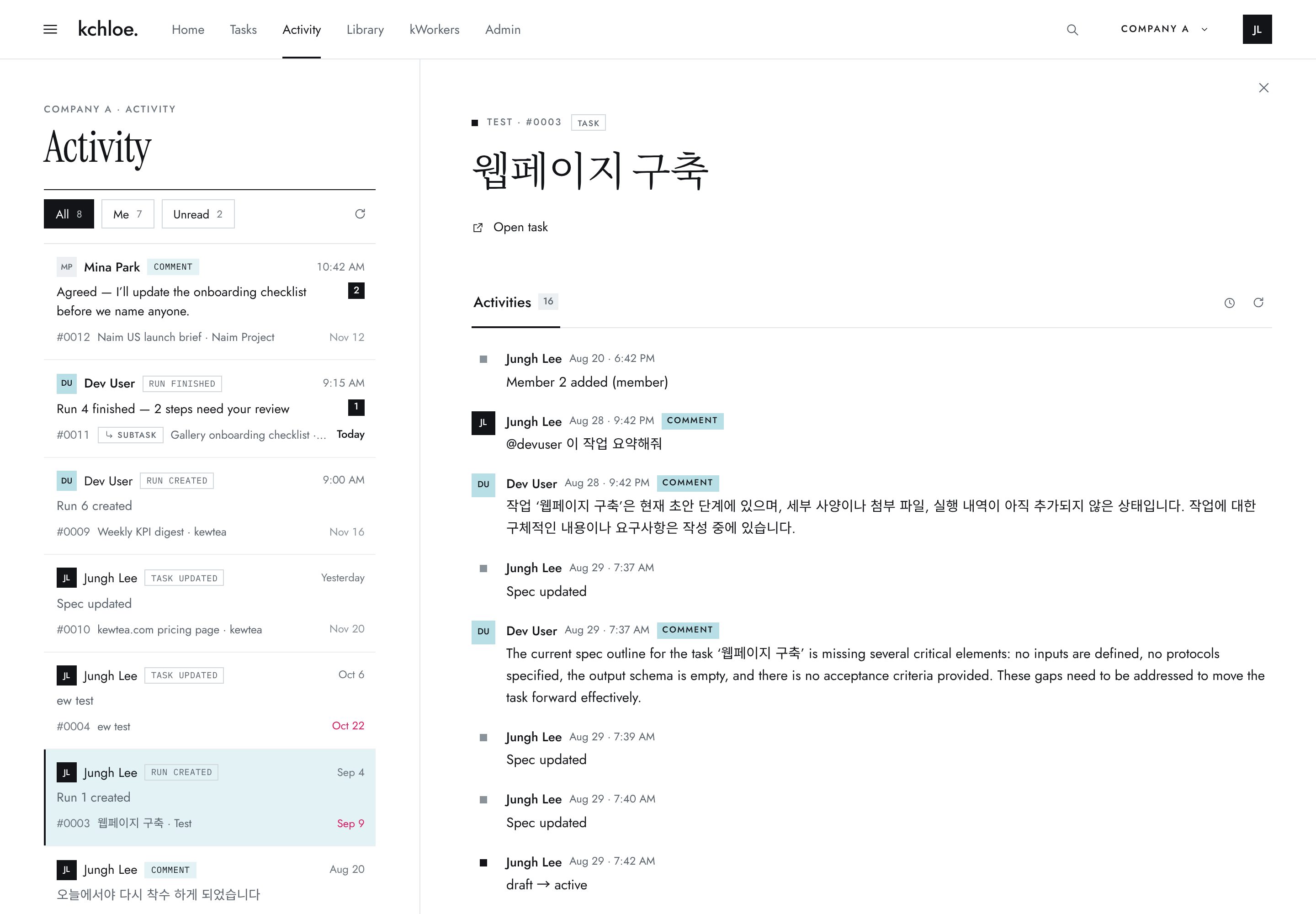
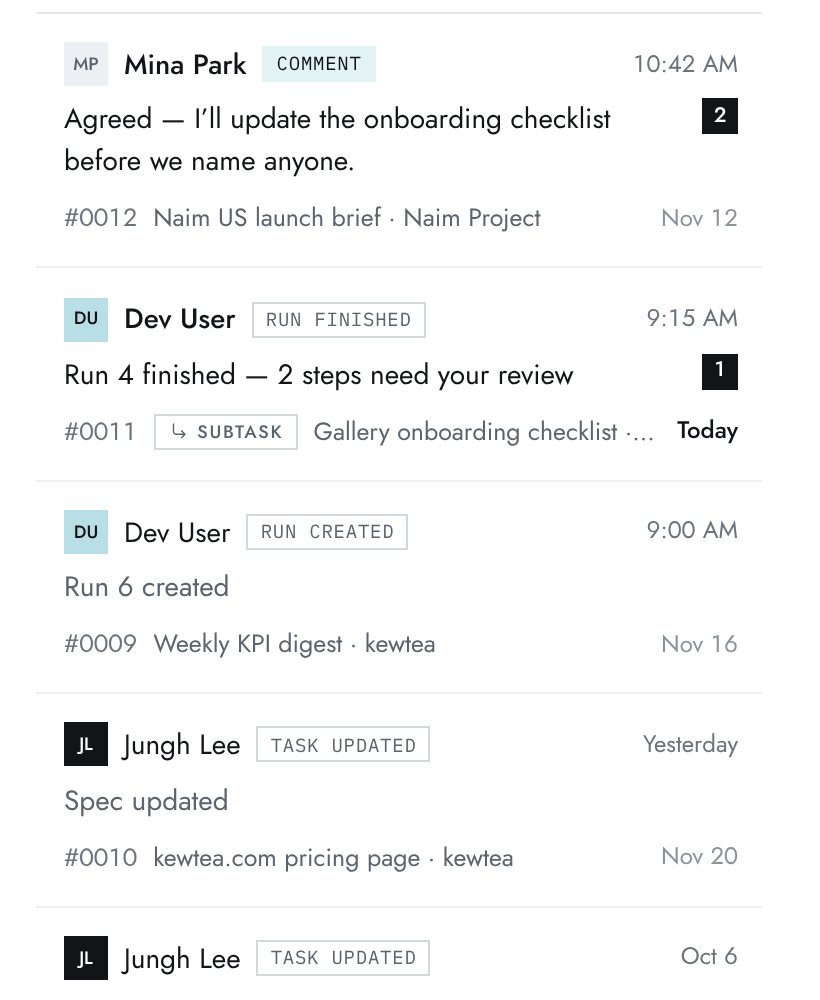
  2. It gathers and drafts, then reports what it did in the task’s activity.
  3. You review. It can only do what its account allows.

In this work

  • A kWorker gathers sources and keeps every link with the task.
  • It reports what it found in the activity; you decide what counts as evidence.
kchloe screen · sample data
kchloe screen · sample data

M2

Run it more than one way

Live
SolvesP1

How it works

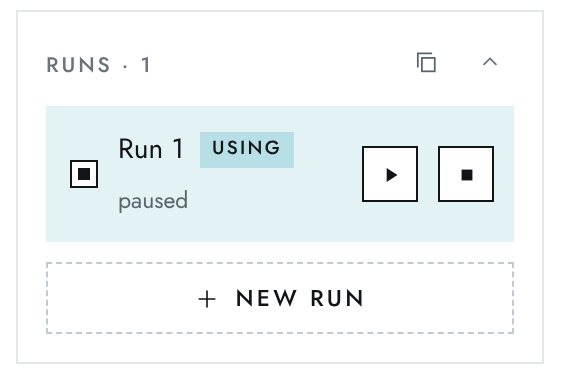
  1. Start a run from the spec.
  2. Start another with a different approach, worker or constraint.
  3. Compare them, then choose the run to use — or combine the best parts.

In this work

  • One run per lens — market structure, customers, economics — side by side.

Coming soon: rubric reviews score each run, and signals suggest what to try next.

kchloe screen · sample data

kchloe screen · sample data

M3

Decide on the task

Live
SolvesP3

How it works

  1. Discuss in the task’s activity, next to its runs and sources.
  2. Mention people or kWorkers to bring them in.
  3. The decision and its reasons stay in the task’s history.

In this work

  • Discuss the runs in the task’s activity and record the decision there.
  • Months later, the reasons are still next to the decision.
kchloe screen · sample data

kchloe screen · sample data

Where else it applies

The same pattern, in nearby work.

Market sizing

Top-down and bottom-up as two runs, side by side.

Customer research synthesis

Interviews in, themes out — sources kept.

Due diligence

A checklist-first spec, and a record of every source.

Pricing research

Comes back with every launch; keep what held up.

What to expect

What builds up over time.

1quarter

A research spec, and two lenses you could compare.

4quarters · a year

Sources you trust, kept with every claim.

8quarters · two years

A trail of decisions and the evidence behind them.

What can change

  • Every claim can point back to its source.
  • Two lenses can be weighed before one becomes the answer.
  • The reasons for a decision can stay next to the decision.

Results differ from task to task, and we won’t promise them. What we can promise is effort: we’ll keep doing our best to help your work improve.

Start here

Bring this first

You bringA question

Paste it into a quick chat. Add the plan this research feeds, if you have it.

Analyze our three closest competitors for next quarter’s plan. Run a market-structure lens and a customer lens, and cite every source.

What people own

  • Treat runs as arguments to review, not as facts.
  • High-stakes strategy needs people who own the decision.
  • Agents gather and draft; they don’t replace judgment.

Bring one important task. See how far it can go.

Start free. Bring your team when you're ready.